DIT PACKAGING / CUSTOM FLEXIBLE PACKAGING
Custom flat-bottom pouches & eight-side seal bags
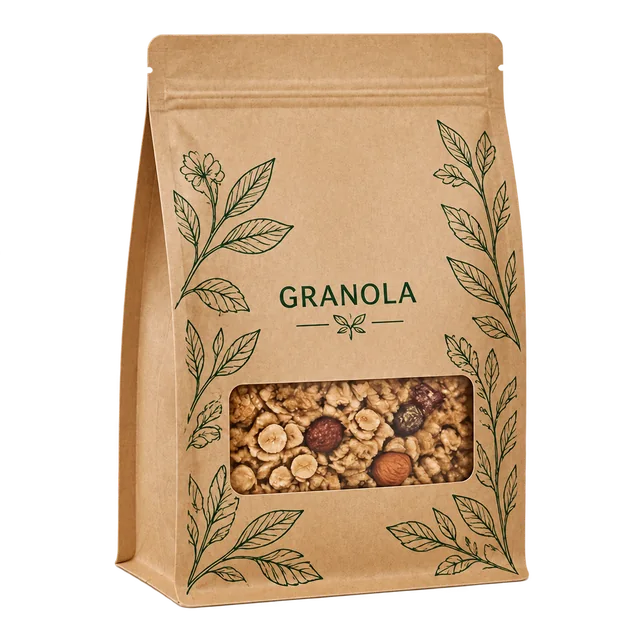
A custom flat-bottom pouch combines a defined base, front and back panels, and two side panels. Also called a box pouch or eight-side seal bag, it gives coffee and dry-food brands several print surfaces in a structured pack. Share your contents and quantity to review the dimensions, laminate and closure options.
At a glance
- Also called
- Box pouches or eight-side seal bags, with a defined base and side panels.
- Size to specify
- Front width, height, base depth and side-gusset dimensions on a drawing.
- Custom options
- Front, back and side artwork; review the material and closure together.
- Start your brief
- Contents, fill weight, quantity per artwork and delivery destination.
Not sure about a detail? Start with your product and quantity.
Download a blank packaging quotation checklist (.txt) · Fill in what you know and send it to Jack.
Consider the base, shelf shape and panel space
This format can be discussed for coffee, tea, nuts, snacks and other compatible contents where a defined base and side panels are useful. The shape creates different artwork opportunities from a bottom-gusset stand-up pouch, including information on the side panels.
Choose the construction around the filled product, handling and display. A taller bag is not automatically a larger usable pack: product density, filling clearance and the final closure also matter. Share both the intended fill quantity and an existing bag or drawing if you have one.
Flat-bottom, stand-up or side-gusset bag?
Choose the finished shape before commissioning artwork. A front-view product photo can hide the differences in the base and side panels; the same stated filling weight is not a shared bag specification.
| Format | Construction to identify | Artwork consideration |
|---|---|---|
| Flat-bottom pouch | Defined base plus front, back and two side panels. | Allocate artwork to five panels and confirm fold and seal clearances. |
| Stand-up pouch | Expandable bottom gusset beneath front and back faces. | Confirm the zipper area and bottom-fold layout. |
| Side-gusset bag | Inward side folds that expand when filled; seam and end construction need a drawing. | Keep side text correctly oriented when the gussets open. |
Label each dimension on a bag drawing
Provide the finished front width and height, then show the base depth and side-gusset dimensions separately. Use millimetres and explain whether measurements refer to a folded empty bag or its expanded shape. This is particularly helpful when a supplier’s previous notation is unfamiliar.
Do not apply a stand-up pouch’s half-bottom measurement or an internal quotation formula to this format. The base and side-panel construction need their own drawing. Confirm the agreed dimensions and seal layout before the artwork is fitted to the bag.
- Mark the front and back panels and label the finished width and height.
- Show the base depth and both side panels, with fold lines identified.
- Indicate the filling opening and the space needed for the final seal.
- State the fill weight or volume, total thickness if known and units for every measurement.
Plan artwork across the panels
Assign artwork to the front, back, sides and base using the approved layout. Check orientation when the bag is standing and when the side panels open. A design that looks correct as a flat image may place a logo, barcode or instruction across a fold or seal.
Ask about zipper access, tear notches, windows or a coffee valve if relevant. Feature positions and combinations depend on the final construction; settle them before preparing production artwork. Identify the panel that should face the shelf so display priorities are clear.
A kraft-look design does not establish the full laminate composition. Discuss appearance separately from the material structure and product requirements. Provide storage conditions and the target shelf life so the material review is based on use, rather than visual style alone.
Flat-bottom / eight-side seal bag artwork layout reference
Use this flat-bottom, or eight-side seal, reference to plan artwork across the front, back, sides and bottom.
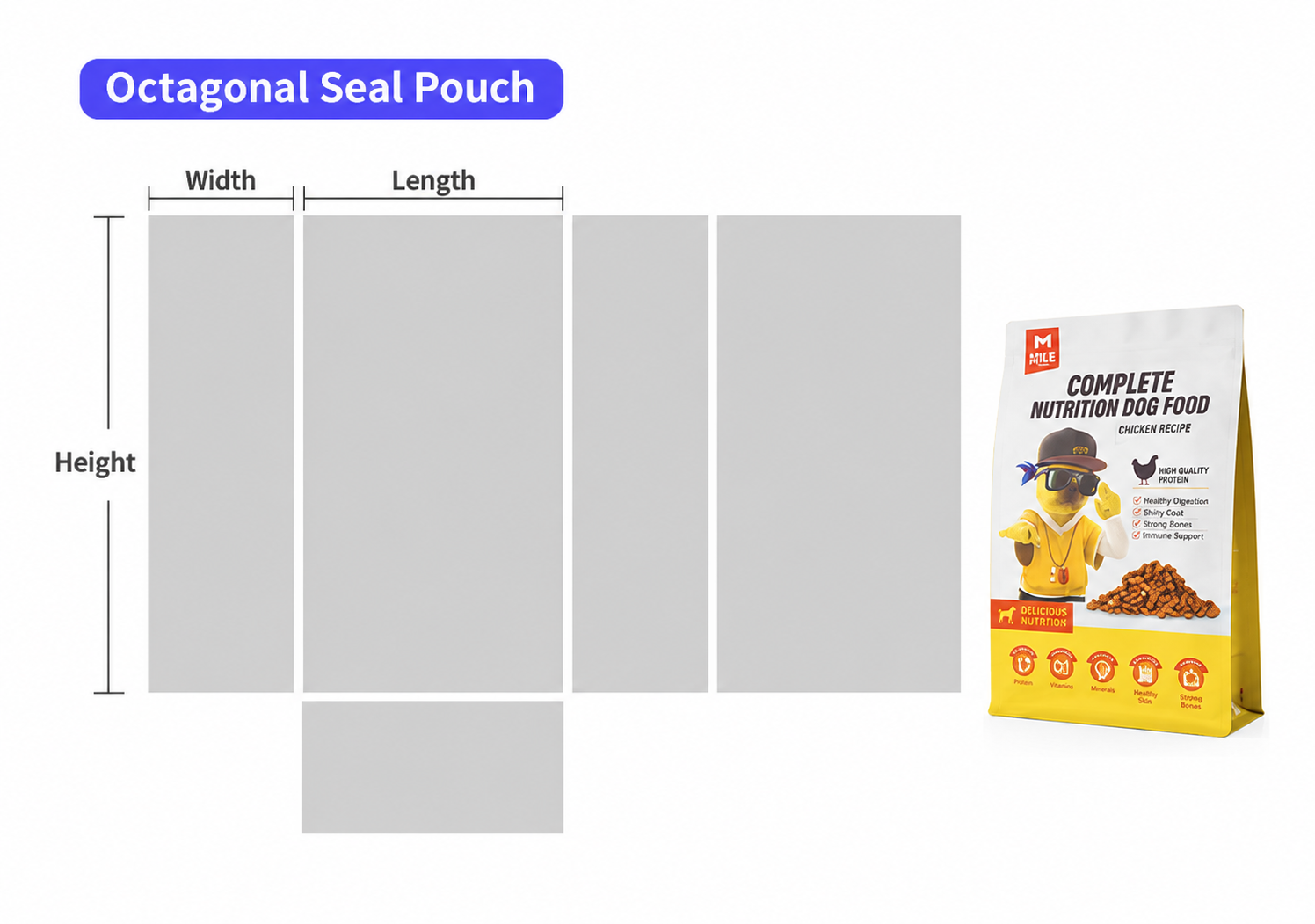
Use this image to plan panel placement. Request a dimensioned dieline for your chosen size, with confirmed folds, seals and artwork margins, before preparing production artwork.
- Assign artwork to the front, back, two sides and bottom; confirm its orientation when the finished bag stands upright.
- This reference labels the narrow side-panel dimension “Width” and the broad-panel dimension “Length”. Label each panel by name on your drawing to avoid confusion; the vertical dimension is “Height”.
Confirm the specification before comparing prices
For comparable quotations, use the same dimensions, laminate, thickness, printing scope, features and quantity per design. Different side-panel sizes or closure arrangements can produce different specifications even when two bags hold a similar product weight.
If your initial requirement is 500 pieces, send the number of designs and sizes with the inquiry. MOQ 500 must be confirmed for the selected construction and print method. Ask for sample options and approval steps before committing to production. The quotation should identify payment terms and the planned production schedule; delivery timing also depends on transport.
DIT can discuss DDP, FOB or CIF when you provide a delivery address or named port. Include your target arrival date, not only the date you would like bags to leave production.
YOUR PRODUCT. YOUR SPECIFICATION.
Request a packaging quote
Discuss custom flat-bottom pouches & eight-side seal bags with Jack. Start with what you pack and your reply email. Leave undecided details open.
- Tell us your product and quantity.
- We review the format, material and sample options.
- Confirm the specification, price and timing before ordering.
PRODUCTION BEHIND YOUR PACKAGING
Digital and gravure options for your project
DIT Packaging serves overseas buyers, supported by digital production in Guangzhou and gravure production in Shaoguan. The printing route is reviewed against your specification and order plan.
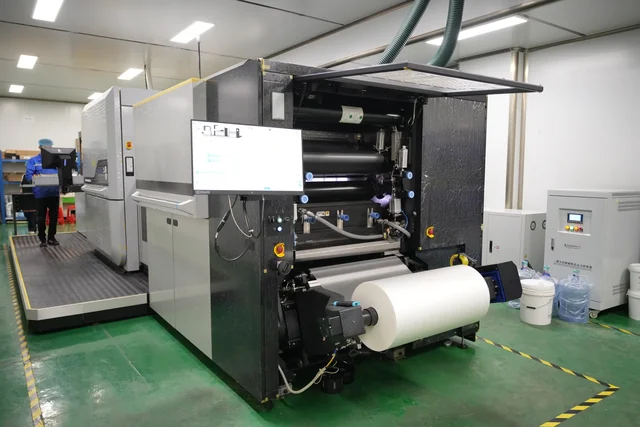
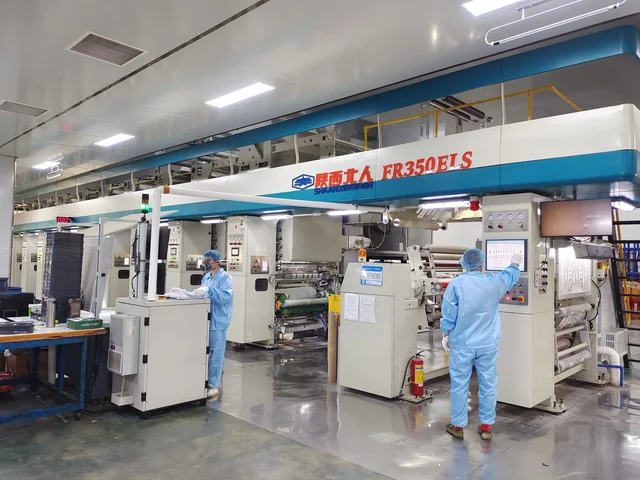
Company-supplied production photos. View our production overview · Read production licenses and their named holders
Buyer questions
Is a flat-bottom pouch also called a box pouch?
These names are commonly used for the defined-base format shown here. DIT also describes it as an eight-side seal bag. Confirm the front, back, side panels, base and seal layout on a drawing because a product name alone is not a complete specification.
What is the difference between flat-bottom and stand-up pouches?
A flat-bottom bag has a defined base and side panels. A stand-up pouch uses an expandable bottom gusset. Their dimensions, artwork layouts and filled shapes should be compared separately.
Can I use the size from an existing stand-up pouch?
Use it as a reference for the product, but not as a complete flat-bottom specification. Send the reference dimensions and filling information so a suitable base and panel layout can be reviewed.
Should artwork be prepared before the panel layout?
A design concept can come first, but production artwork should use the agreed layout. Confirm dimensions, folds, seals, opening and optional features before final artwork approval.
YOUR NEXT STEP
Send Jack your packaging brief
Share your product, approximate quantity, bag dimensions and delivery destination. If a detail is undecided, say so; the specification can be reviewed before quotation.
jack@ditpackaging.com · +86 188 9665 3135
Guangzhou DIT Packaging Trading Co., Ltd.
广州迪爱特包装贸易有限公司
Supported by digital production in Guangzhou and gravure production in Shaoguan. See production photos and production licenses with their named holders.